|
| Avoid wet‑weather electrical hazards |
| During this rainy season, follow these tips to protect yourself and your coworkers from wet‑weather electrical hazards. |
| Order our FREE worker safety kit on the National Grid e‑SMARTworkers website. |
|
|
|
|
| Stay away from downed wires |
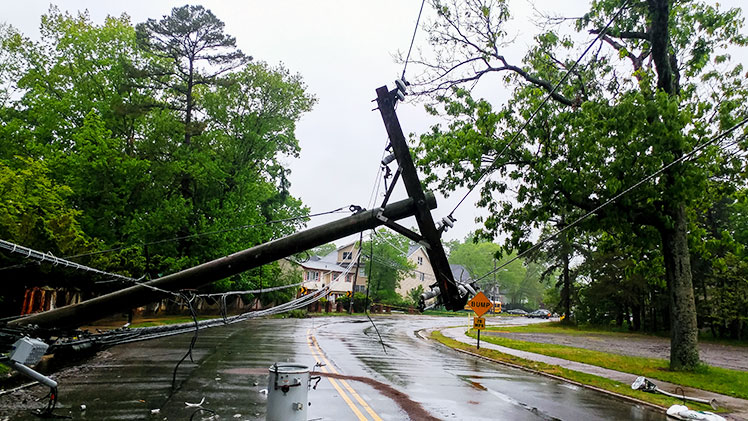
| Stormy weather can cause electrical wires to fall. Always assume any downed wire is energized and dangerous, and stay far away! Do not drive over a downed wire, and do not touch the wire or anything in contact with it – including water. Call 911 and tell the operator it’s an electrical emergency. |
| If a wire falls on or near your vehicle |
| If a wire comes down on or near your vehicle, call 911 and National Grid's emergency line immediately, and stay put until utility workers tell you to exit. Warn others to stay far away from the line and anything it is touching. Anyone who contacts the line, the equipment or even the ground nearby may be injured or killed. |
| If you must get out due to fire or other danger, exit through a door that is free of electrical wires and that is not touching anything in contact with the ground (such as a tree, fence or fire hydrant). Follow these steps: |
| |
| • |
|
Jump clear without touching the vehicle and the ground at the same time. Be careful not to fall back against the vehicle. |
|
| • |
|
Avoid any downed or sagging wires. |
|
| • |
|
Land with your feet together and shuffle away with small steps, keeping both feet together and on the ground at all times. |
|
| • |
|
Once clear, do not return to the vehicle until National Grid has declared it safe. |
|
|
|
| Don’t mix water and electricity |
| Water conducts electricity, so keep your power tools dry and use them in a dry location. If you must work in wet conditions, use tools and extension cords that are suitable for outdoor use and plug them into ground fault circuit interrupters (GFCIs) for shock protection. |
| Would you like to know more? |
| Additional utility safety tips, case studies, instructional videos and educational tools can all be found, at no charge to you, on National Grid’s contractor safety website. |
|
|
|
|